

The World’s Most Beautiful Modern Architecture Destinations
Modern architecture has transformed the way we experience cities.
While ancient temples, medieval cathedrals, and centuries-old palaces continue to attract millions of visitors every year, some destinations have become attractions in their own right because of what has been built in the last few decades. These cities prove that architecture isn’t just about preserving the past. It can also shape the future, redefine skylines, and completely change how people interact with urban spaces.
From airports that feel like indoor forests to museums that appear to float above the ground, modern architecture has become one of the most compelling reasons to travel. Some cities embraced bold experimentation, while others used contemporary design to reinvent former industrial districts or create entirely new landmarks that are now recognized around the world.
Whether you’re an architecture enthusiast or simply someone who appreciates remarkable design, these destinations showcase some of the most impressive examples of modern architecture anywhere on the planet.
✍️ Noah · June 12, 2026

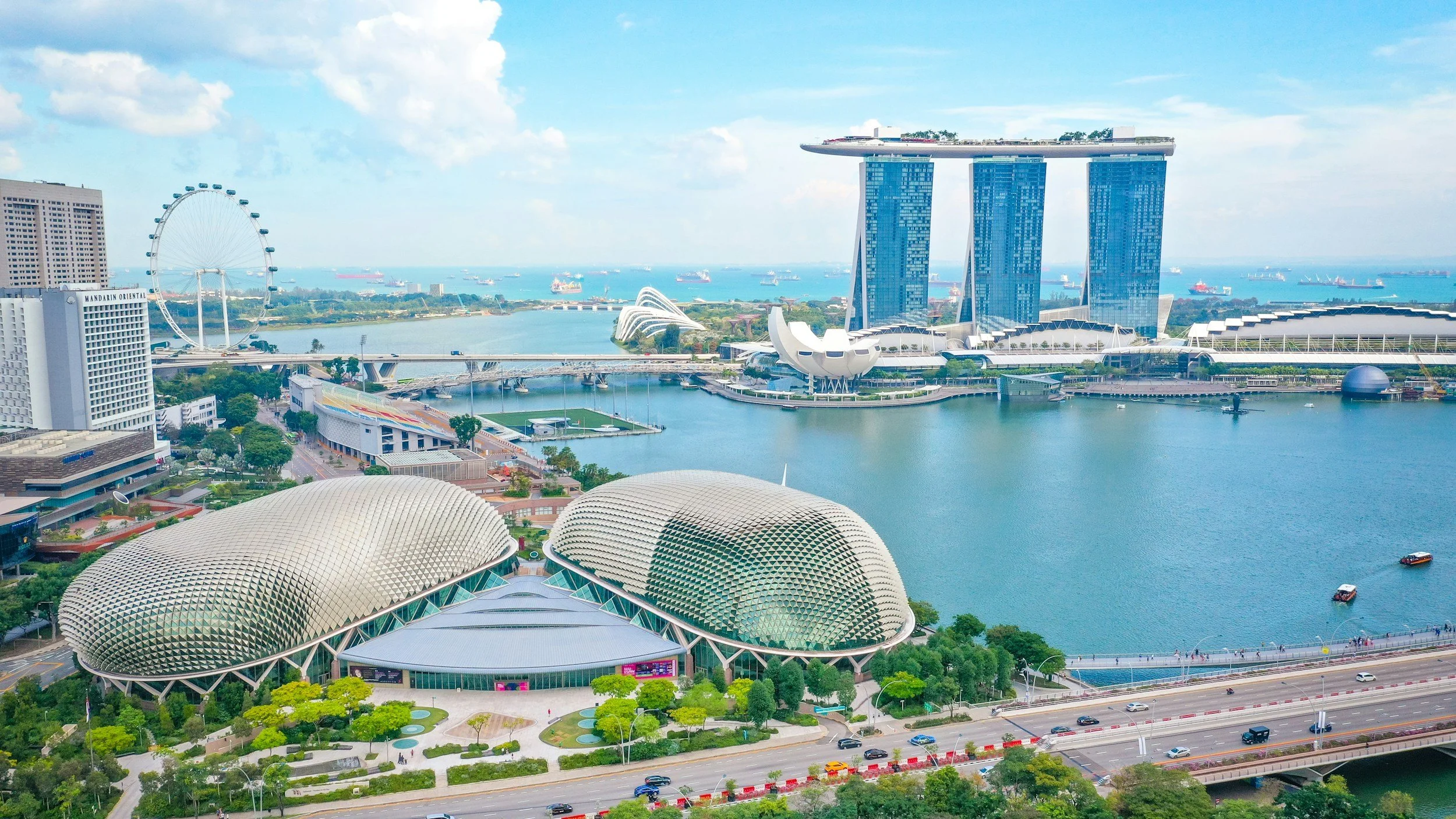
Singapore
Few cities have embraced modern architecture as completely as Singapore.
Just a few decades ago, much of the area around Marina Bay looked entirely different. Today, it has become one of the most recognizable urban landscapes in the world, where futuristic skyscrapers, green spaces, and innovative public infrastructure work together to create a city that often feels several steps ahead of its time.
The building that most visitors immediately recognize is Marina Bay Sands. When it opened in 2010, its three towers connected by a rooftop sky park instantly became one of the most photographed structures in Asia. Beyond its striking appearance, the project helped redefine Singapore’s waterfront and transformed Marina Bay into the city’s new center of gravity.
A short walk away stands Gardens by the Bay, where architecture and nature merge in ways rarely seen elsewhere. The giant Supertrees have become symbols of the city, while the cooled conservatories demonstrate how design and sustainability can coexist on a massive scale.
The architectural experience continues at Jewel Changi Airport. More than an airport terminal, it functions as a destination itself. Its enormous indoor waterfall, surrounded by lush vegetation beneath a glass dome, has turned a transportation hub into one of Singapore’s most visited attractions.
What makes Singapore special isn’t a single building. It’s how an entire city has been designed around a long-term vision of density, sustainability, and public space.
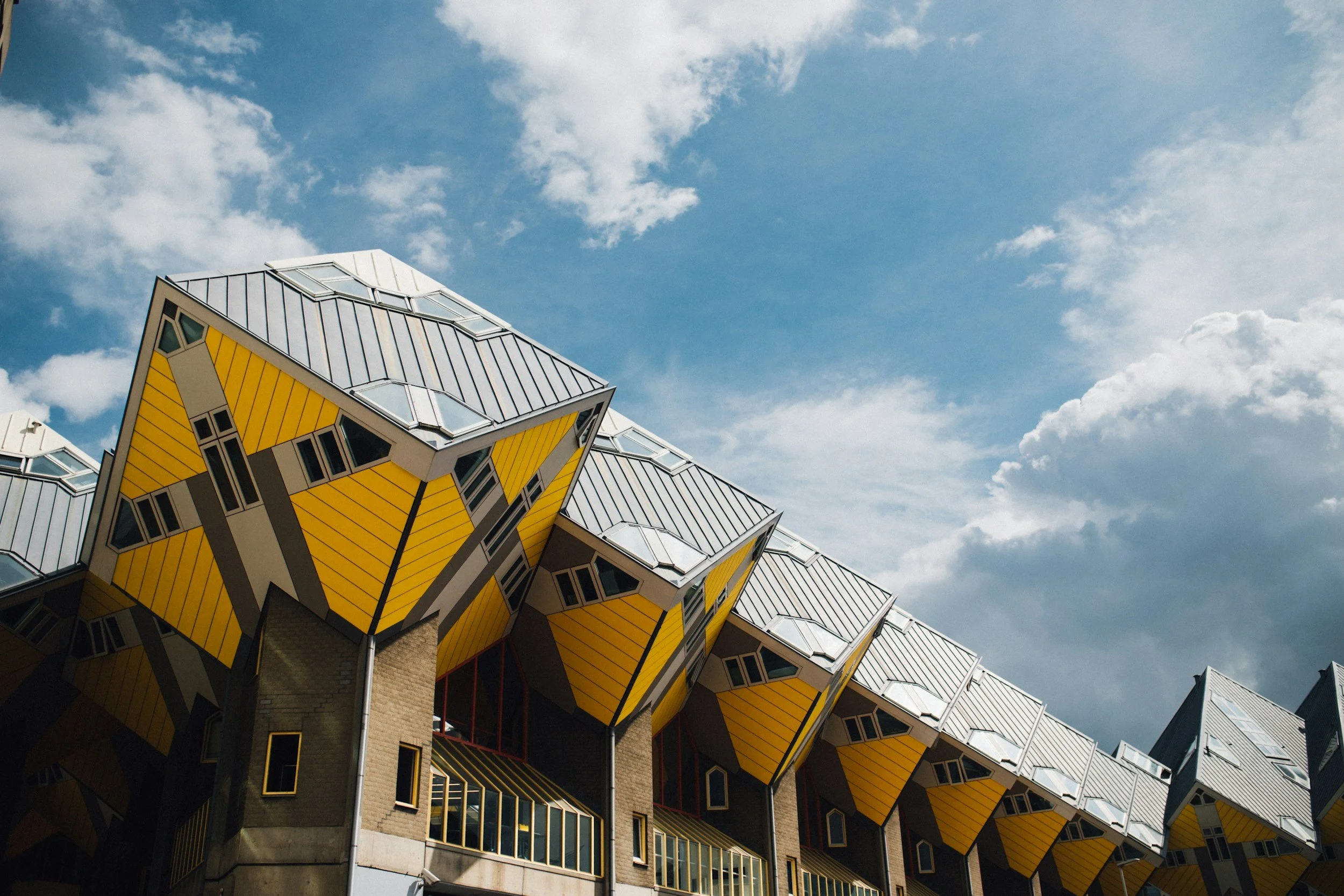
Rotterdam, Netherlands
If Amsterdam represents the Netherlands’ historic charm, then Rotterdam represents its architectural future.
The city was heavily damaged during the Second World War, forcing Rotterdam to rebuild much of its urban core from scratch. Rather than recreate what had been lost, planners chose a different path. They embraced experimentation, innovation, and architectural risk-taking.
Today, Rotterdam has become one of Europe’s most exciting destinations for contemporary design.
One of its most famous landmarks is Cube Houses. Designed by architect Piet Blom, these tilted cube-shaped homes challenge conventional ideas of what residential architecture should look like. Walking beneath them feels almost surreal, as if the buildings were balancing impossibly above the street.
Nearby, the striking Markthal combines housing, retail space, and a food market beneath a massive horseshoe-shaped structure. Its colorful interior artwork and dramatic scale have made it one of the city’s defining landmarks.
The skyline itself tells the story of Rotterdam’s ambition. Along the waterfront, projects such as De Rotterdam and the elegant Erasmus Bridge demonstrate how contemporary architecture can completely reshape a city’s identity.
Rotterdam isn’t simply a city with modern architecture. It feels like a place where architects are constantly testing what cities of the future could become.
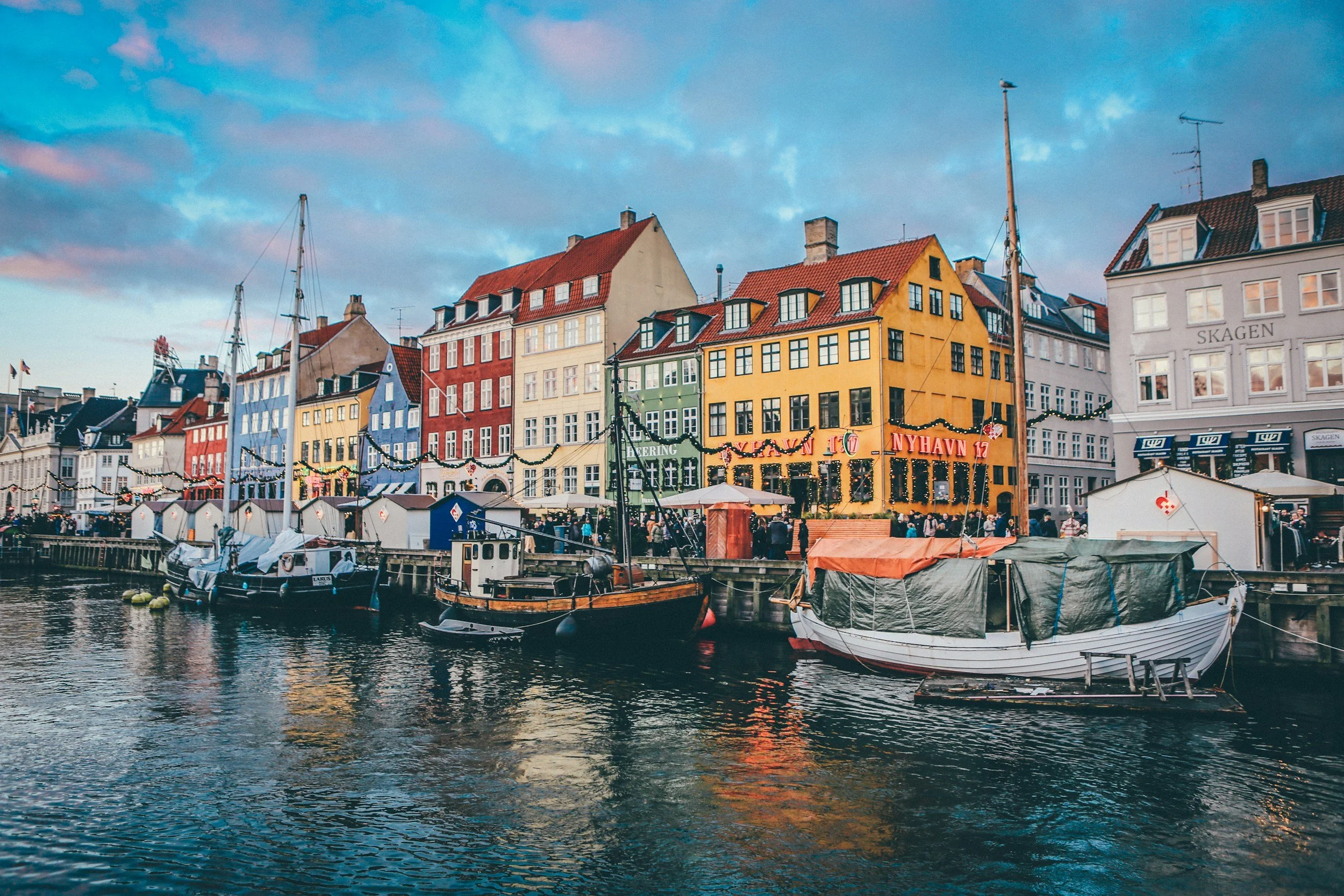
Copenhagen, Denmark
In many cities, modern architecture focuses primarily on appearance. In Copenhagen, the conversation often begins with how buildings function.
The Danish capital has become a global leader in sustainable urban design, creating projects that combine environmental responsibility with striking visual identity. The result is a city where architecture doesn’t just look impressive—it actively improves daily life.
Perhaps no project illustrates this better than CopenHill.
At first glance, it appears to be a futuristic hill rising from the city. In reality, it’s a waste-to-energy plant topped with a public ski slope, hiking trail, and climbing wall. The idea that industrial infrastructure could double as recreational space has made it one of the world’s most celebrated examples of contemporary urban design.
Another standout is BLOX, a waterfront complex that serves as a cultural center dedicated to architecture, design, and urban development. Its layered geometric form reflects the city’s ongoing commitment to innovative public spaces.
Throughout Copenhagen, modern buildings coexist naturally with historic neighborhoods, cycling infrastructure, and waterfront promenades. Rather than competing with the city’s past, contemporary architecture enhances it.
The result is one of the most livable and visually cohesive cities in the world.
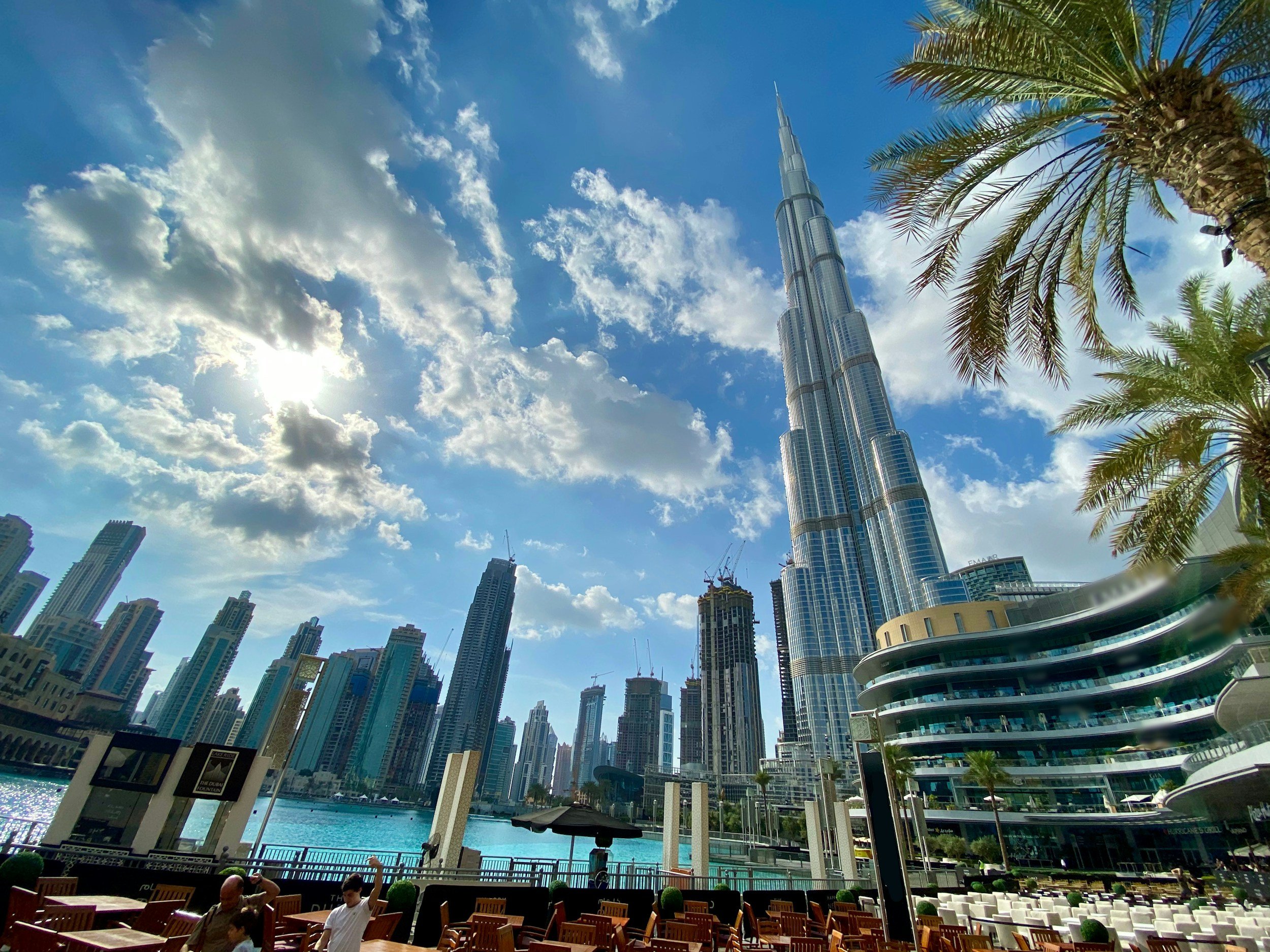
Dubai, United Arab Emirates
There are few places on Earth where architecture has transformed a destination as dramatically as Dubai.
In just a few decades, Dubai evolved from a regional trading hub into a global city known for constantly pushing architectural boundaries. Ambition is visible everywhere, from the scale of its projects to the speed at which new landmarks appear.
At the center of it all stands Burj Khalifa, the tallest building in the world. Rising above the city skyline, the tower has become one of the defining symbols of modern architecture in the 21st century.
Yet Dubai’s architectural appeal extends far beyond a single skyscraper.
The recently completed Museum of the Future has quickly become one of the world’s most recognizable contemporary buildings. Its futuristic torus-shaped design, covered in Arabic calligraphy, demonstrates how architecture can function as both art and engineering.
Nearby, landmarks such as Dubai Frame and Burj Al Arab continue the city’s tradition of creating structures that instantly become global icons.
What makes Dubai fascinating is not necessarily subtlety. It’s the willingness to imagine architecture on a scale that few other cities attempt.
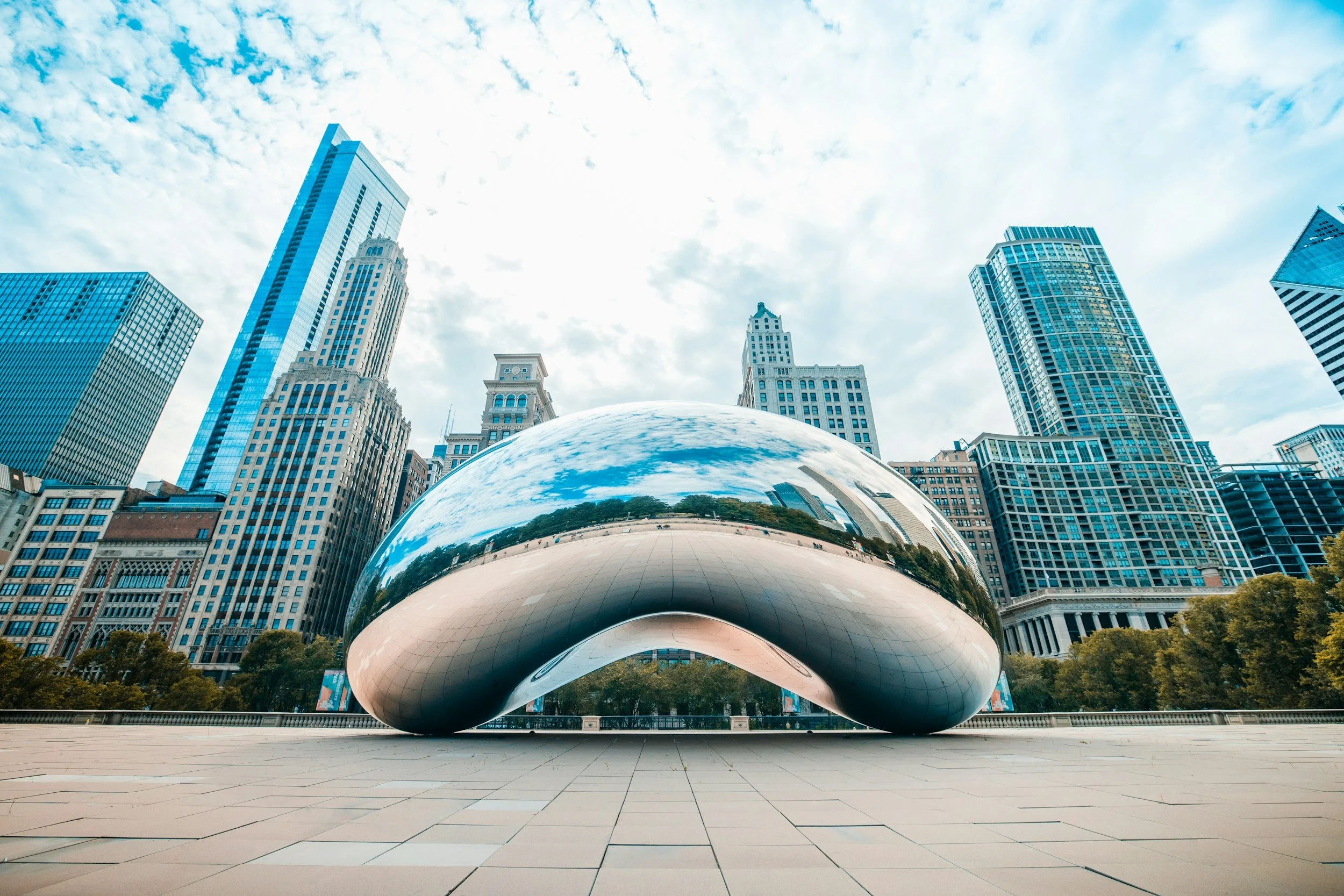
Chicago, United States
Long before cities competed to build the tallest towers or the most futuristic skylines, Chicago was already changing the future of architecture.
Often referred to as the birthplace of the modern skyscraper, Chicago played a crucial role in shaping the urban landscapes we know today. Following the Great Chicago Fire of 1871, architects and engineers were forced to rethink how cities could be built. The innovations that followed would influence skyscraper design across the globe.
Today, that architectural legacy remains visible throughout the city.
One of the best ways to appreciate Chicago’s design heritage is from the Chicago River. Architectural boat tours have become one of the city’s most popular experiences because they reveal how different generations of buildings tell the story of architectural evolution.
Modern landmarks such as Aqua Tower demonstrate how contemporary architects continue pushing boundaries. Its flowing balconies create the illusion of water rippling down the side of the structure, making it one of the most distinctive residential towers in the world.
Nearby, the city’s constantly evolving skyline includes some of North America’s most impressive examples of contemporary design. Unlike cities where modern architecture feels disconnected from its surroundings, Chicago’s skyline reflects more than a century of experimentation and innovation.
For architecture lovers, few cities offer a clearer understanding of how the modern city came to be.
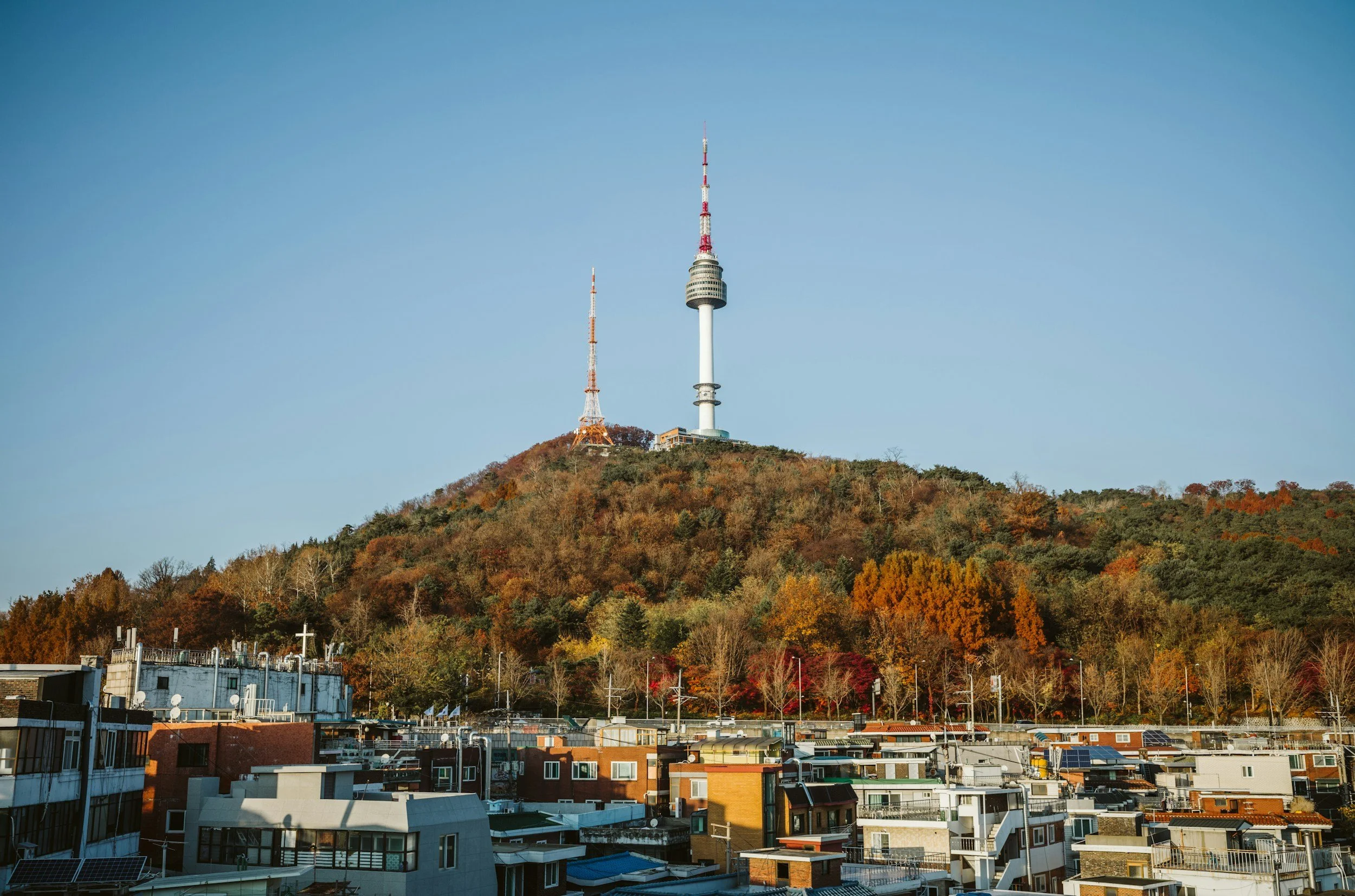
Seoul, South Korea
Few places blend centuries of history and cutting-edge design as successfully as Seoul.
In one part of the city, visitors can walk through royal palaces dating back hundreds of years. A short subway ride away, they find themselves surrounded by futuristic structures that seem to belong to another era entirely.
One of the most striking examples is Dongdaemun Design Plaza, commonly known as DDP.
Designed by Zaha Hadid, the building’s flowing metallic form transformed a former sports stadium site into one of Seoul’s most recognizable landmarks. Its curved surfaces appear almost organic, challenging traditional ideas of what architecture should look like.
Another defining feature of the skyline is Lotte World Tower. As one of the tallest buildings in the world, it dominates the city’s southern districts while offering panoramic views across the Korean capital.
What makes Seoul particularly interesting is that modern architecture here rarely exists in isolation. New projects are constantly being integrated into existing neighborhoods, creating a fascinating dialogue between old and new.
The city feels as though it is simultaneously preserving its past and designing its future.
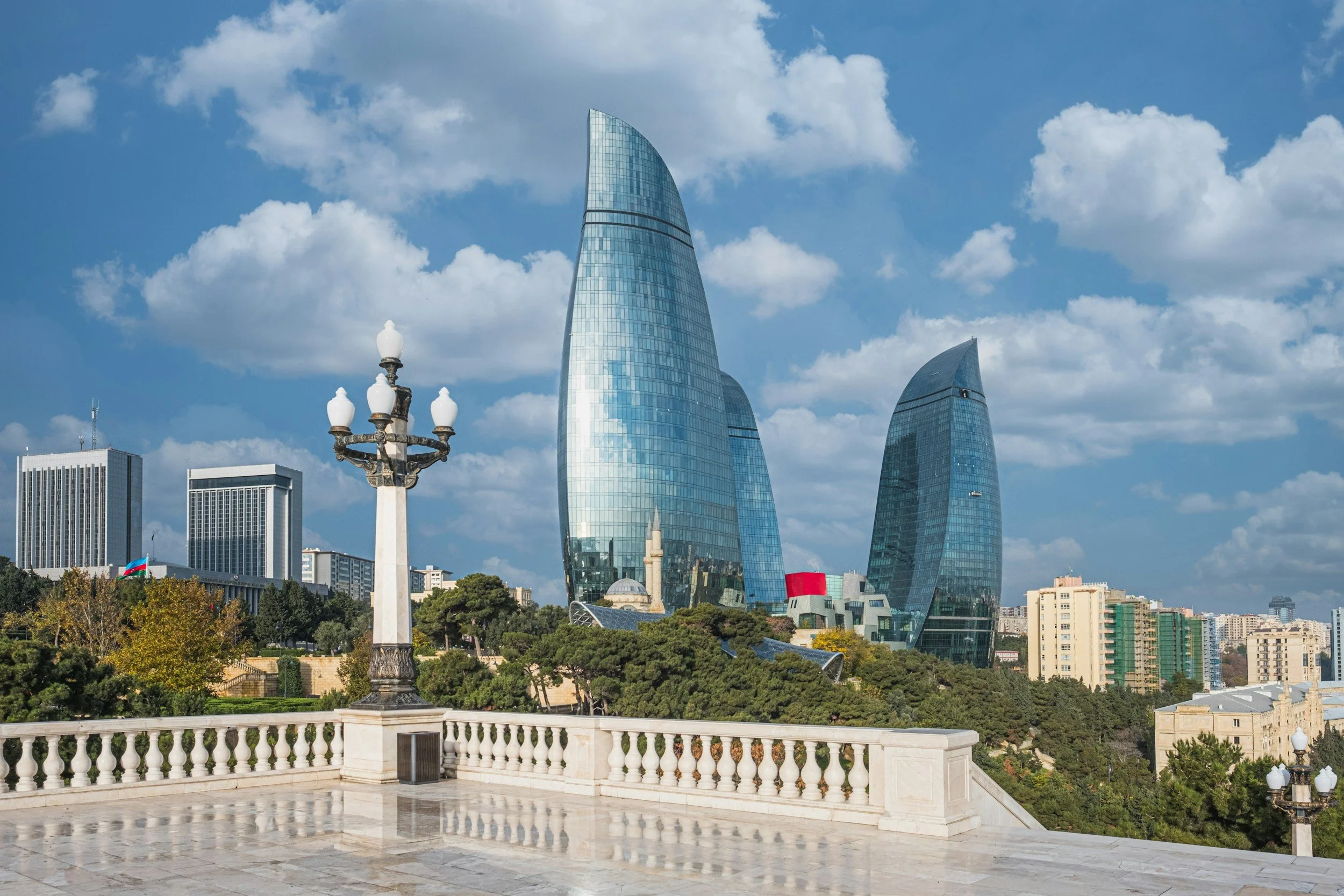
Baku, Azerbaijan
For many travelers, Baku remains one of the world’s most underrated architecture destinations.
Located on the shores of the Caspian Sea, the Azerbaijani capital has undergone a dramatic transformation over the last two decades. Historic stone buildings and medieval walls now share the skyline with some of the most ambitious contemporary projects in Eurasia.
The most famous of these is undoubtedly Heydar Aliyev Center.
Also designed by Zaha Hadid, the building has become one of the defining works of 21st-century architecture. Its sweeping white curves appear to rise naturally from the landscape, creating a structure that feels almost fluid despite its enormous scale.
Elsewhere in the city, the illuminated Flame Towers dominate the skyline. Inspired by Azerbaijan’s historical connection to fire, the towers have become the modern symbol of the country.
What makes Baku unique is the contrast between architectural eras. Walking from the UNESCO-listed Old City toward the modern waterfront feels like moving between different centuries within a matter of minutes.
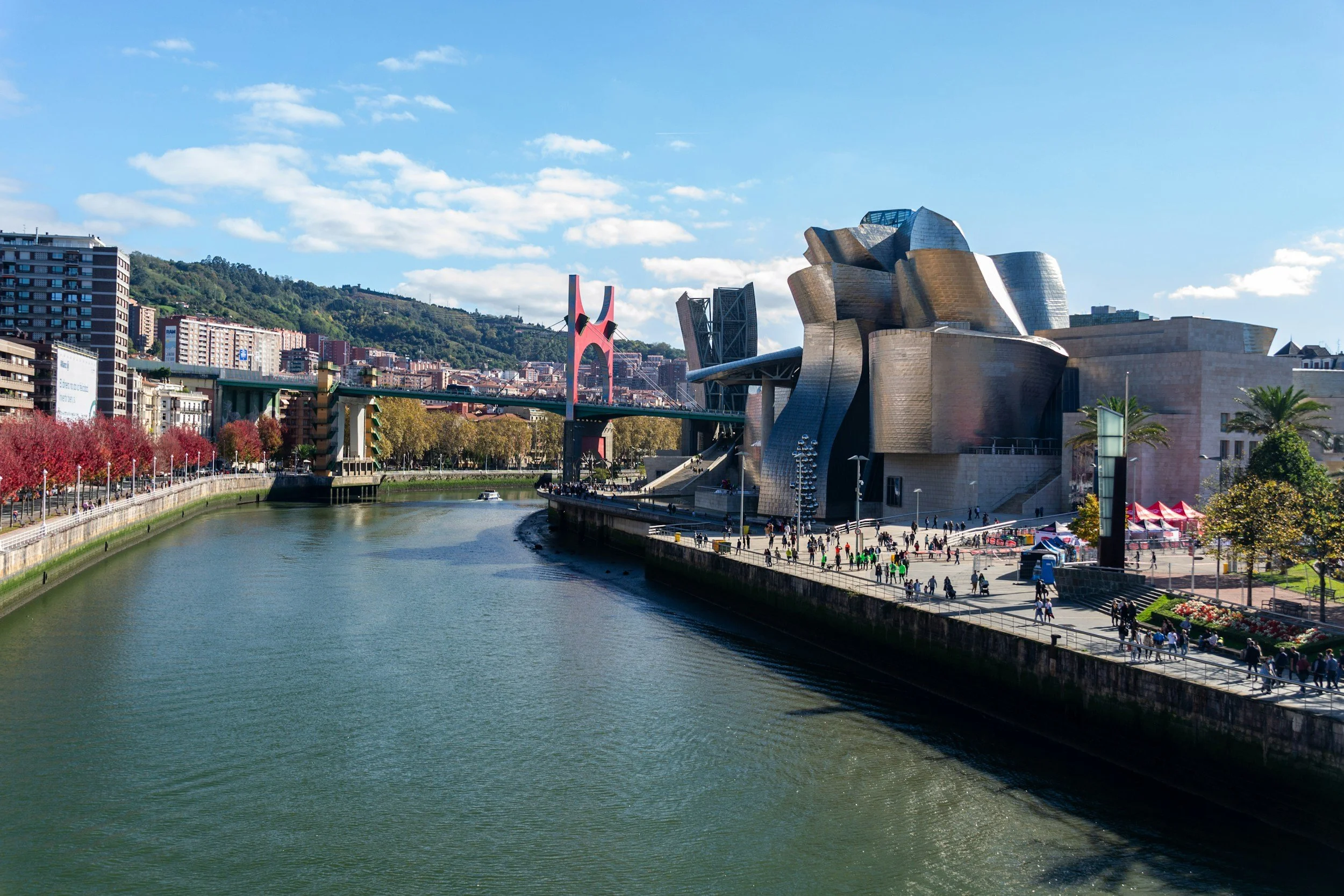
Bilbao, Spain
Few cities demonstrate the power of architecture to transform a destination better than Bilbao.
For much of the 20th century, Bilbao was known primarily as an industrial center. Shipyards and heavy industry shaped the city for generations. By the 1990s, however, local leaders sought a new vision for the future.
The result became one of the most famous urban regeneration stories in modern history.
At the center of that transformation stands Guggenheim Museum Bilbao.
Designed by Frank Gehry, the museum’s titanium-covered curves immediately attracted global attention when it opened in 1997. More importantly, it helped reposition Bilbao as an international cultural destination.
The effect was so significant that urban planners and architects eventually coined the term “Bilbao Effect” to describe how a single architectural project can reshape a city’s image and economy.
Today, visitors can explore a city where modern bridges, public spaces, and cultural institutions complement the famous museum. Bilbao proves that architecture is capable of doing far more than creating beautiful buildings—it can redefine an entire destination.
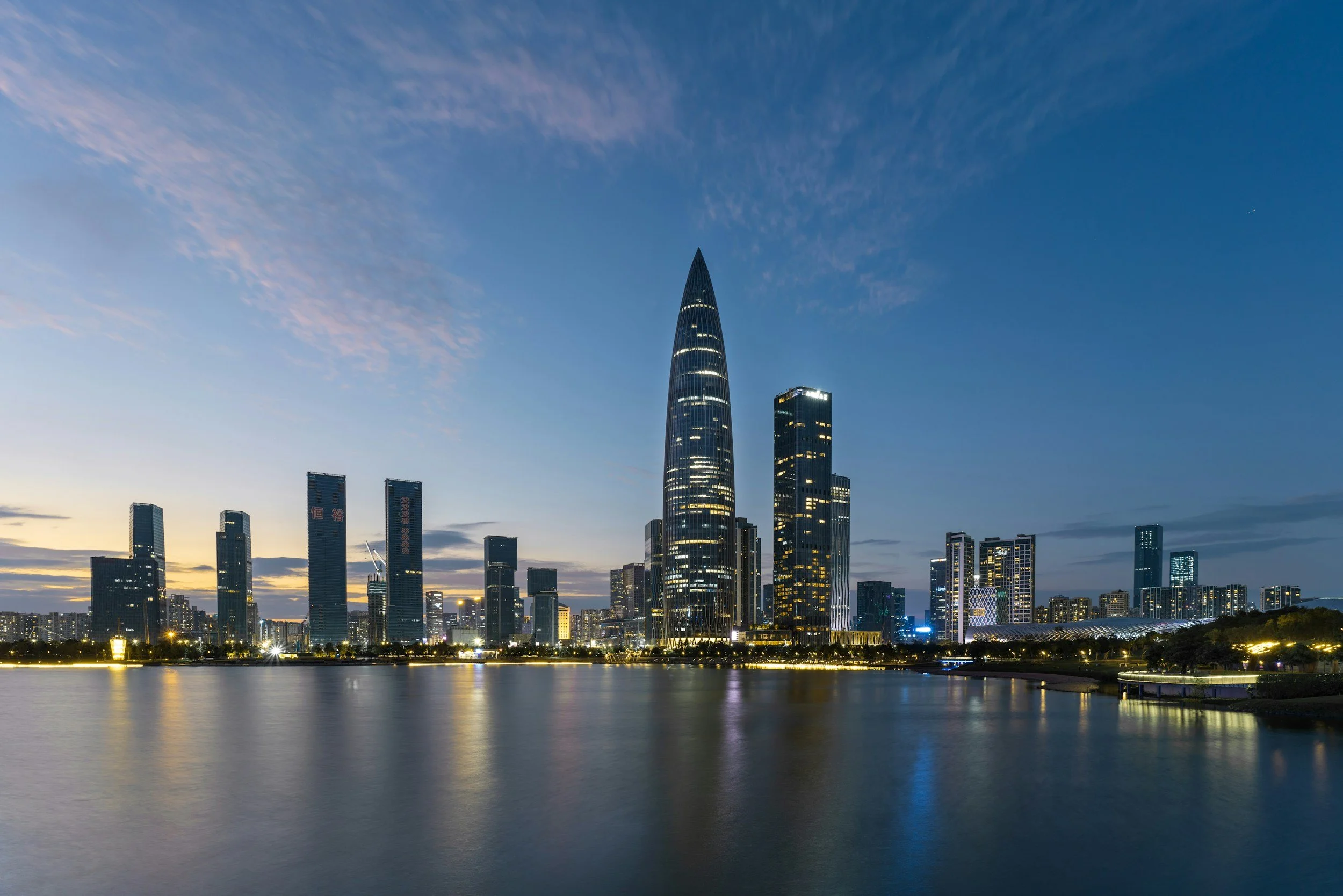
Shenzhen, China
No city on this list illustrates the speed of modern urban transformation better than Shenzhen.
Only a few decades ago, Shenzhen was a relatively small fishing community neighboring Hong Kong. Today, it is one of the world’s largest technology hubs and a city defined by an ever-changing skyline.
The pace of development here is astonishing.
Towering above the city is Ping An Finance Centre, one of the tallest buildings on Earth. Its sleek profile reflects the city’s focus on innovation and economic growth.
Beyond individual skyscrapers, entire districts have been designed with contemporary architecture in mind. Waterfront developments, public parks, cultural centers, and technology campuses combine to create an urban landscape that often feels more futuristic than present-day.
Unlike many historic cities where architecture reflects centuries of gradual evolution, Shenzhen offers something entirely different: a glimpse into how major cities may continue to develop during the decades ahead.
Why Modern Architecture Is Worth Traveling For
Architecture has always shaped the way people experience destinations.
Cathedrals, castles, temples, and palaces tell the stories of past civilizations. Modern architecture, however, reveals how cities imagine their future. It reflects cultural ambitions, technological innovation, environmental priorities, and changing ideas about how people should live and interact.
Whether it’s Singapore’s vision of a greener city, Rotterdam’s experimental spirit, Copenhagen’s sustainable design philosophy, or Dubai’s pursuit of the extraordinary, each destination on this list demonstrates that architecture can be every bit as inspiring as history.
For travelers willing to look beyond traditional landmarks, these cities offer something unique: the opportunity to see the future taking shape one building at a time.
✍️ This blog was written by Noah.
